

History
The Sikh Empire
1799 – 1839 · Start here
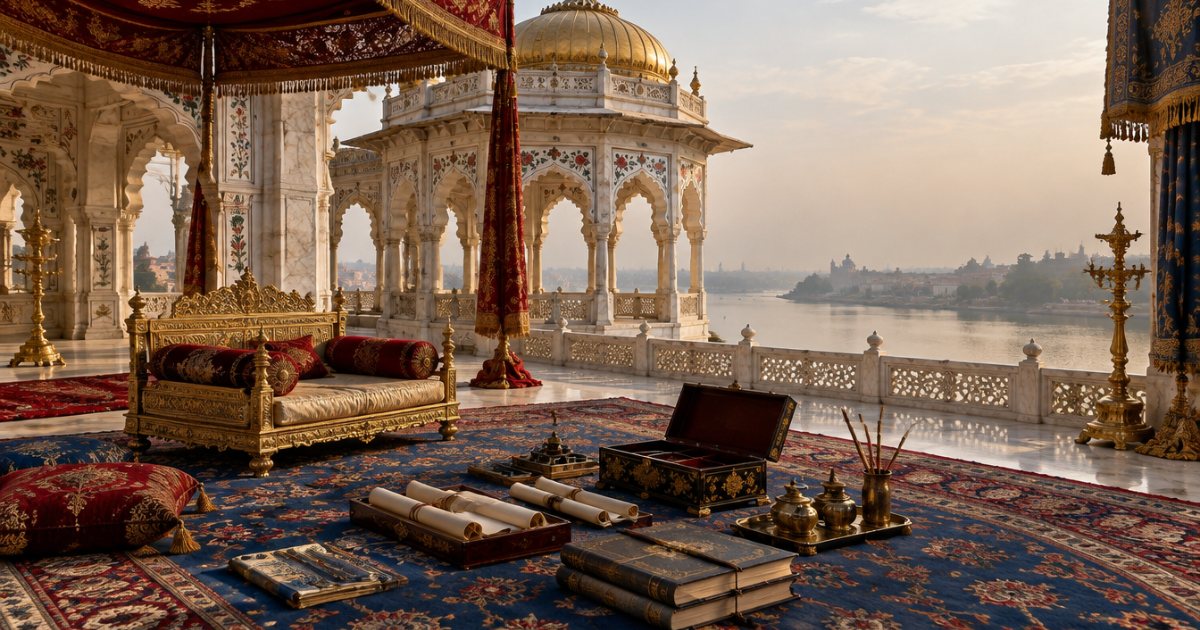
July 1799. A nineteen-year-old Sikh chief, his face scarred and one eye lost to smallpox as a child, rides into Lahore at the head of his horsemen. Over the next forty years he will build the strongest kingdom in India outside British rule, and he will never wear a crown.
A boy from Gujranwala
Ranjit Singh was born on 13 November 1780 in Gujranwala, the son of Mahan Singh, chief of the Sukerchakia misl. Smallpox nearly killed him as a small child and took the sight of one eye. When his father died in 1792, he became chief at the age of twelve.
The Panjab he grew up in was a patchwork. A dozen Sikh misls held their own lands, often at odds with each other, while Afghan armies under Shah Zaman kept crossing the passes to claim the plains. Someone was going to bring it together. Very few would have bet on a one-eyed teenager.
The ride into Lahore
Lahore was held by three Bhangi chiefs, Chet Singh, Sahib Singh and Mohar Singh, and many of its people had had enough of them. On 7 July 1799 Ranjit Singh, with his mother-in-law Sada Kaur of the Kanhaiya misl at his side, led his men into the city. The Bhangi sardars fled. Lahore, the old capital of the Panjab, was his.
A Maharaja without a crown
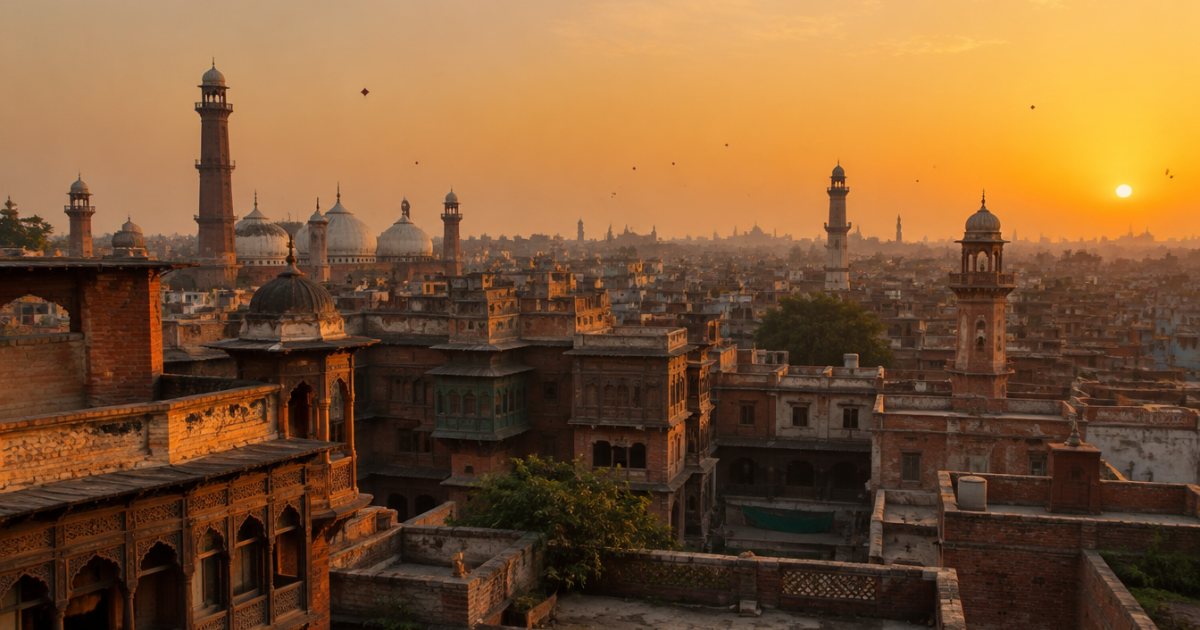
On 12 April 1801, the day of Vaisakhi, Ranjit Singh was proclaimed Maharaja of the Panjab. Baba Sahib Singh Bedi, a descendant of Guru Nanak Dev Ji, marked his forehead with the tilak. There was no crown. Ranjit Singh called his government the Sarkar-e-Khalsa, “the government of the Khalsa” (in everyday Panjabi, ਸਰਕਾਰ ਖ਼ਾਲਸਾ), not a government of himself.
His coins said the same thing. They carried no portrait and no royal name, only couplets in Persian giving the glory to the Gurus, as the coins of the Sikh misls had done before him.
On the Sikh rupee
Deg o tegh o fateh o nusrat be-dirang,
yaft az Nanak Guru Gobind Singh.
“Abundance and the sword, victory and help without delay, are received from Guru Nanak and Guru Gobind Singh.”
The holy city and the river line
Next came Amritsar. In 1802 Ranjit Singh took the city from the Bhangi widow Mai Sukhan, together with the great Bhangi gun, the Zamzama (some accounts put the final surrender in 1805). The spiritual heart of the Sikhs, and the richest market in the Panjab, was now his.
To the east, the British were watching. On 25 April 1809 Ranjit Singh signed the Treaty of Amritsar with the East India Company’s envoy, Charles Metcalfe. The Sutlej became the line: the Sikh states south of it would be under British protection, and north and west of it, the Maharaja was free. He kept that treaty for the rest of his life, and turned his armies the other way.
The mountain of light
In 1813 the exiled king of Afghanistan, Shah Shuja, was a refugee in Lahore. Ranjit Singh had sheltered him, and in June that year the Koh-i-Noor passed from the Afghan king to the Maharaja of the Panjab. The most famous diamond in the world now sat in the Lahore treasury, and Ranjit Singh wore it on his arm.
An army like no other
Ranjit Singh built a modern army, the Fauj-i-Ain, on top of the old Khalsa horsemen. He hired officers who had served in Napoleon’s wars, among them Jean-Baptiste Ventura, Jean-François Allard, Claude Auguste Court and Paolo Avitabile, to drill his infantry and cast his guns. Within twenty years his artillery was as good as any in Asia.
Alongside them rode the great Sikh generals: Hari Singh Nalwa, whose name was feared beyond the Khyber, and Sardar Sham Singh Attariwala, whose story you will meet again at Sobraon.
Multan, Kashmir and the frontier
In June 1818, after years of attempts, the Sikh army stormed the fort of Multan, where Nawab Muzaffar Khan died fighting. A year later, in July 1819, an army under Misr Diwan Chand took Kashmir, with its rich trade in shawls and saffron. In 1834 Hari Singh Nalwa took Peshawar, the winter capital of the Afghan kings, and held the frontier. He was killed defending the fort of Jamrud, at the mouth of the Khyber Pass, in April 1837.
ਮੁਲਤਾਨ, ਕਸ਼ਮੀਰ, ਪਿਸ਼ੌਰ, ਚੰਬਾ,
ਜੰਮੂ, ਕਾਂਗੜਾ ਕੋਟ, ਨਿਵਾਇ ਗਿਆ ।
Multan, Kashmir, Pishaur, Chamba, Jammu, Kangra kot, nivai gaya.
“Multan, Kashmir, Peshawar, Chamba, Jammu and the fort of Kangra: he made them all bow.”
A court of every faith
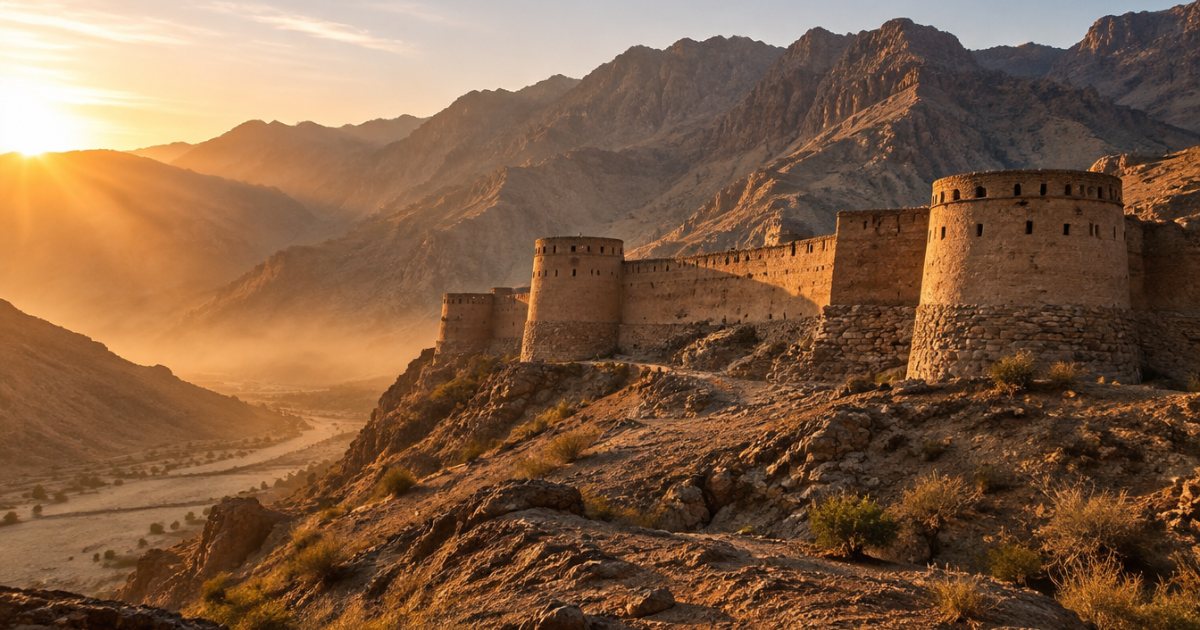
The Sarkar-e-Khalsa was run by people of every faith. Its foreign minister, Fakir Azizuddin, was a Muslim. Its finances were in the hands of Hindu diwans such as Dina Nath. Diwan Sawan Mal, a Hindu, governed Multan for more than twenty years and was known for his fairness. Sikh, Hindu, Muslim and European officers served side by side, and the Maharaja gave to Gurdwaras, temples and mosques alike.
His own greatest gift went to Amritsar. He paid for the gold that covers the upper storeys of Sri Harmandir Sahib in Amritsar, the city founded by Guru Ram Das Ji. It is the reason the world now calls it the Golden Temple. Read more about the city’s founder in our article on Guru Ram Das Ji.
The Lion grows old
By the late 1830s Ranjit Singh’s kingdom ran from the Khyber Pass to the Sutlej and from Ladakh to the deserts below Multan. Its people called him Sher-e-Panjab, the Lion of the Panjab. But from the mid-1830s a series of strokes left him weaker each year, until he could barely speak.
On 27 June 1839 he died in Lahore. He had built an empire on his own judgement and on the loyalty of the men around him. And some of those men were already making plans.
The Sikh Empire in dates
- 178013 November
Ranjit Singh is born
Born in Gujranwala, son of Mahan Singh of the Sukerchakia misl.
- 1792Aged twelve
Chief of the Sukerchakia misl
His father dies and the young Ranjit Singh takes his place.
- 17997 July
Lahore
He rides into the old capital of the Panjab and makes it his own.
- 180112 April, Vaisakhi
Maharaja of the Panjab
Proclaimed Maharaja, without a crown; his government is the Sarkar-e-Khalsa.
- 1802Amritsar
The holy city
Amritsar and the Zamzama gun are taken from the Bhangis (some accounts say 1805).
- 180925 April
Treaty of Amritsar
The Sutlej becomes the line between the Sikh kingdom and the British.
- 1813June
The Koh-i-Noor
The great diamond passes from Shah Shuja to the Maharaja.
- 1818June
Multan
The Sikh army storms the fort of Multan.
- 1819July
Kashmir
Misr Diwan Chand takes the valley of Kashmir.
- 1834May
Peshawar
Hari Singh Nalwa takes Peshawar, winter capital of the Afghan kings.
- 1837April
Jamrud
Hari Singh Nalwa is killed defending the Khyber frontier.
- 183927 June
The Lion dies
Maharaja Ranjit Singh dies in Lahore, aged fifty-eight.
A legacy carved in gold
Almost two centuries later, Ranjit Singh’s name still means something to people far beyond the Sikh world: a ruler of humble manners who built an empire, kept faith with a treaty for thirty years and gave equal respect to every faith in his kingdom.
Did you know? A golden throne was made for Maharaja Ranjit Singh by the goldsmith Hafiz Muhammad Multani. He seldom used it, preferring to sit cross-legged among his courtiers, and today it is on display at the Victoria and Albert Museum in London.
Up next · How it was lost, part 1 of 4 After the Lion of Panjab, 1839–1845 27 June 1839. The Lion of Panjab is dead. Within six years his heirs are cut down one by one, and the Khalsa army takes charge of the kingdom. Read part 1 →Keep our history alive
Join us at the next club event and meet the families who carry these stories.
See what’s onPanjab, the land of five rivers · The sword in Sikhism (Sikhi) · The main principles of Sikhism (Sikhi)
Sources and further reading
- Shah Mohammad, Jangnama Singhan te Firangian (c. 1846). Panjabi text as given on Panjabi Wikisource
- Khushwant Singh, A History of the Sikhs, Volume 1 (1963)
- Joseph Davy Cunningham, A History of the Sikhs (1849)
- Lepel Griffin, Ranjit Singh (1892)
- Hari Ram Gupta, History of the Sikhs, Volume V: The Sikh Lion of Lahore (1991)
- SikhCoins.in: The Sikh Empire