

History
The Treaties of Lahore and Amritsar
March 1846 · The Anglo-Sikh treaties, part 3
Three weeks after the battle of Sobraon, a boy of seven and a half put his name to a treaty that took the richest land of his kingdom, the guns of his army and the mountains of Kashmir. One week later, the mountains were sold.
Lahore, February 1846
The First Anglo-Sikh War ended at Sobraon on 10 February 1846, lost less by the Khalsa’s soldiers than by the commanders who betrayed them, as told in The First Anglo-Sikh War. On 20 February the Governor-General, Sir Henry Hardinge, entered Lahore.
The treaty that followed was imposed on Maharaja Duleep Singh, then about seven and a half years old. Its preamble set out the Company’s version of events: the Sikh army had broken the treaty of 1809 by unprovoked aggression on British territory, and peace was now being restored. That was the state narrative, written into the first lines of the document. The men who signed for Lahore had little choice but to accept it.
Sixteen articles: 9 March 1846
The Treaty of Lahore was signed on 9 March 1846. For the British it was signed by Frederick Currie and Major Henry Lawrence, under Hardinge’s authority. For Lahore it was signed by the Maharaja with Bhai Ram Singh, Raja Lal Singh, Sardar Tej Singh, Sardar Chattar Singh Attariwala, Sardar Ranjodh Singh Majithia, Dewan Dina Nath and Fakir Nur-ud-din. Its key terms were these:
- Lahore gave up every claim south of the Sutlej, and ceded the Jalandhar Doab, the fertile land between the Beas and the Sutlej.
- Lahore owed a war indemnity of one and a half crore rupees. Because it could not pay it all, it ceded its hill territories between the Beas and the Indus, including Kashmir and Hazara, in place of one crore. Sixty lakh rupees was to be paid at once.
- The army was to be cut to twenty-five battalions of infantry, about twenty thousand men, and twelve thousand cavalry, and could not be enlarged without British consent. Thirty-six guns were to be surrendered.
- The British took control of the tolls and ferries on the Beas, the Sutlej and the lower Indus.
- Lahore recognised Raja Gulab Singh of Jammu as an independent ruler of hill territories to be given to him, and could not change its borders without British agreement.
- Article 15: the British would not interfere in Lahore’s internal government, though the Governor-General would give advice when asked.
ਪਾਪ ਕੀ ਜੰਞ ਲੈ ਕਾਬਲਹੁ ਧਾਇਆ ਜੋਰੀ ਮੰਗੈ ਦਾਨੁ ਵੇ ਲਾਲੋ ॥
Pāp kī jañ lai Kābalahu dhāiā jorī mangai dān ve Lālo.
“Bringing the marriage party of sin, Babar has invaded from Kabul, demanding by force our land as his wedding gift, O Lalo.”
Guru Nanak watched Babar’s armies take Panjab and named what he saw: a demand made by force and dressed up as a gift. Three centuries later the conquerors came from the other direction and wrote their demands in English and Persian. The language was more polite. The structure was the same.
Soldiers in the fort: 11 March 1846
Two days later came a set of supplementary articles. A British force would stay in the fort and city of Lahore until the end of 1846, to protect the Maharaja while the army was reorganised, and Lahore’s own troops would leave the city. Lahore would provide quarters and pay the extra cost of the British force. The British would respect the lifetime rights of jagirdars in the ceded lands, and commissioners from both sides would mark out the new boundary.
It was presented as a temporary arrangement for the Maharaja’s safety. In practice, the capital of the Sikh state was now garrisoned by the army that had just defeated it, at its own expense.
Kashmir is sold: 16 March 1846
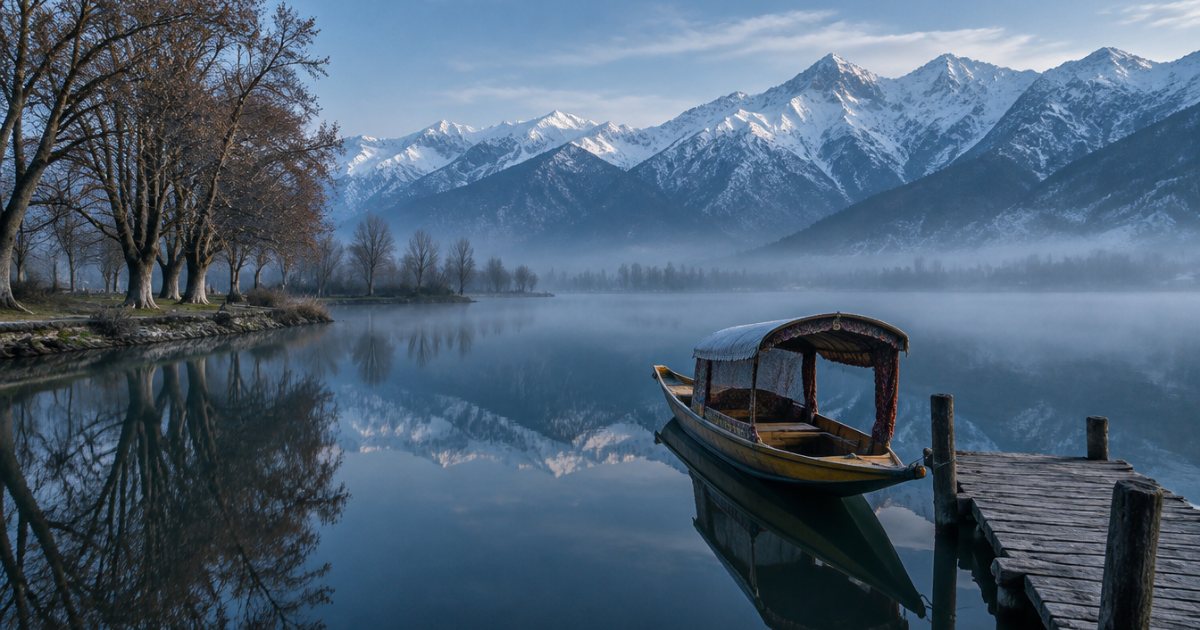
On 15 March Gulab Singh, the Dogra raja who had stood aside while the Khalsa fought, was invested as Maharaja. The next day the Company signed the Treaty of Amritsar with him. He received all the hill country of Jammu and Kashmir, which had been provinces of the Sikh kingdom, and paid the British seventy-five lakh Nanakshahi rupees. He acknowledged British supremacy, agreed to send his forces to serve with British troops in the hills, and accepted British arbitration in any dispute with Lahore.
Even in Britain the bargain was attacked. Lord Ellenborough condemned it as a reward for Gulab Singh’s treachery towards the Sikhs. Hardinge defended it on political and financial grounds.
The indemnity as a weapon
Follow the money through these three documents. Lahore was charged an indemnity it could not pay. Its land was taken in place of the money. The land was then sold to a third party for cash. Within a single week, a province and its people passed from the Sikh state to the Company and from the Company to Gulab Singh, and at no point were the people of Kashmir asked anything at all.
At the same time the Lahore state lost its richest farmland, most of its army, its guns and the tolls on its own rivers. What it kept was the promise of Article 15, that the British would not interfere in its government. Nine months later that promise was set aside, as told in Part 4.
By now the pattern runs at full speed: power drawn away from Lahore clause by clause, a people’s land treated as a sum in an account, and a preamble that tells the world the victims were to blame. Bearing witness means setting the people’s truth beside that preamble. Insaaf asks for nothing less.
Read also: Part 2: Rivers, trade and the road to Kabul · The First Anglo-Sikh War · Part 4: Bhyrowal and the end of the kingdom
Keep our history alive
Join us at the next club event and meet the families who carry these stories.
See what’s onThe Sikh Empire, 1799–1839 · The Anandpur Sahib Resolution · Panjab, the land of five rivers
Sources and further reading
- B. J. Hasrat, “Anglo-Sikh Treaties (Lahore, 9 and 11 March 1846)”, The Encyclopaedia of Sikhism, Punjabi University, Patiala.
- B. J. Hasrat, “Treaty with Gulab Singh”, The Encyclopaedia of Sikhism, Punjabi University, Patiala.
- Sikh Museum Initiative, “The Anglo Sikh Treaties” project (2015).
- J. D. Cunningham, A History of the Sikhs, from the Origin of the Nation to the Battles of the Sutlej (first published 1849; 1918 edition), Internet Archive.
- Sri Guru Granth Sahib, Ang 722 (Raag Tilang, Guru Nanak Dev Ji), SriGranth.org.