

History
The Anandpur Sahib Resolution
ਸ੍ਰੀ ਅਨੰਦਪੁਰ ਸਾਹਿਬ ਦਾ ਮਤਾ · October 1973
In October 1973, at the town where Guru Gobind Singh Ji created the Khalsa, the Shiromani Akali Dal set out a vision of a truly federal India. Few documents in Panjab’s modern history have been so often quoted and so rarely read.
Written at the birthplace of the Khalsa
Anandpur Sahib is not an accidental place for a political document. It was here, in 1699, that Guru Gobind Singh Ji created the Khalsa, a people bound by conscience rather than by caste or court, answerable to the Guru and to the sangat rather than to any emperor. Nearly three centuries later, in October 1973, the working committee of the Shiromani Akali Dal met in the same town and adopted a resolution on how Panjab should be governed. It was endorsed again at the party’s general session at Ludhiana in 1978.
The scholar and former civil servant Sirdar Kapur Singh is closely associated with its thinking. His life’s argument was simple and demanding: a people’s spiritual identity and its political existence cannot be kept in separate rooms. A community that cannot shape its own laws, schools, land and water will, sooner or later, find its culture shaped for it.
What it actually asked for
Read without the decades of propaganda that later surrounded it, the heart of the Resolution is a plan for true federalism. It asked that the central government in Delhi keep only defence, foreign affairs, currency and general communications, including railways, and that every other power rest with the states. It asked that Chandigarh and the Panjabi-speaking areas left out of Panjab in 1966 be returned to it. It raised the sharing of Panjab’s river waters, the interests of farmers and workers, and the protection of Sikh religious institutions across India.
Its language was also openly Sikh, rooted in the idea of the Khalsa’s sovereign conscience. Critics in Delhi read that language as a call to break away. The Akali Dal said again and again that it sought autonomy within India, not outside it. Both readings belong in an honest history. What is beyond dispute is that the specific constitutional demands looked much like what many federations, Canada among them, take for granted.
ਸਭੁ ਕੋ ਮੀਤੁ ਹਮ ਆਪਨ ਕੀਨਾ ਹਮ ਸਭਨਾ ਕੇ ਸਾਜਨ ॥
Sabh ko mīt ham āpan kīnā ham sabhnā ke sājan.
“I have made everyone my friend; I am a companion to all.”
A federal union, at its best, is that verse turned into a constitution: many peoples who are friends and partners, none of whom has to surrender its existence to belong.
Centralisation against federalism
India’s constitution leans towards the centre. Over the 1960s and 1970s that lean grew steeper: state governments could be dismissed from Delhi, budgets and resources flowed upward, and decisions about a region’s rivers and capital city were made far from the people who lived with them. The Anandpur Sahib Resolution was Panjab’s answer to that drift. Other states raised similar complaints, and in 1983 the central government itself appointed the Sarkaria Commission to examine relations between the centre and the states.
From a demand to a “threat”
In August 1982 the Akali Dal launched the Dharam Yudh Morcha to press for the Resolution and related demands through mass, peaceful arrest. Tens of thousands of Sikhs courted jail. Talks were held and broke down. In the state narrative that took shape over these years, a constitutional demand became a separatist plot, and a whole community came under suspicion.
In June 1984 the army attacked Sri Harmandir Sahib and dozens of other Gurdwaras. In November, Sikhs were killed in their thousands across India. In July 1985 the Rajiv-Longowal Accord promised, among other things, to refer the Resolution’s centre-state questions to the Sarkaria Commission and to transfer Chandigarh to Panjab. Weeks later Sant Harchand Singh Longowal was assassinated. Chandigarh was never transferred. A question that could have been settled at a table was left to be settled by force, and Panjab paid for it for a decade.
ਨਾ ਕੋ ਬੈਰੀ ਨਹੀ ਬਿਗਾਨਾ ਸਗਲ ਸੰਗਿ ਹਮ ਕਉ ਬਨਿ ਆਈ ॥
Nā ko bairī nahī bigānā sagal sang ham kau ban āī.
“No one is my enemy, and no one is a stranger; I get along with everyone.”
Why the question has not gone away
The Resolution is old, but the question at its centre is alive. Who decides the price of a farmer’s crop, the course of a river, the language of a school, the future of a capital city? In 2020 and 2021 farmers from Panjab and across India camped for more than a year on the borders of Delhi against three farm laws passed by the centre in a field the constitution gives to the states. The laws were repealed. The underlying question, of how much of a people’s life may be decided for it from far away, was not.
The same question is asked in every federation. Canadians know it in the debates between Ottawa and the provinces, and in the long struggle of Indigenous nations for self-government. It is not a Sikh question alone, or an Indian one. It is a human one: the inherent dignity of a people includes the right to shape its own existence.
Why our club writes about it
Many families in our club lived through the years that followed this Resolution, and many of our young people have only heard about them in fragments. We write about it because history that is not read is easily rewritten, and because the best answer to a distorted story is a careful, honest one. Read the document. Read its critics. Ask your elders what they saw. Then make up your own mind, and stand for justice, peacefully and without fear.
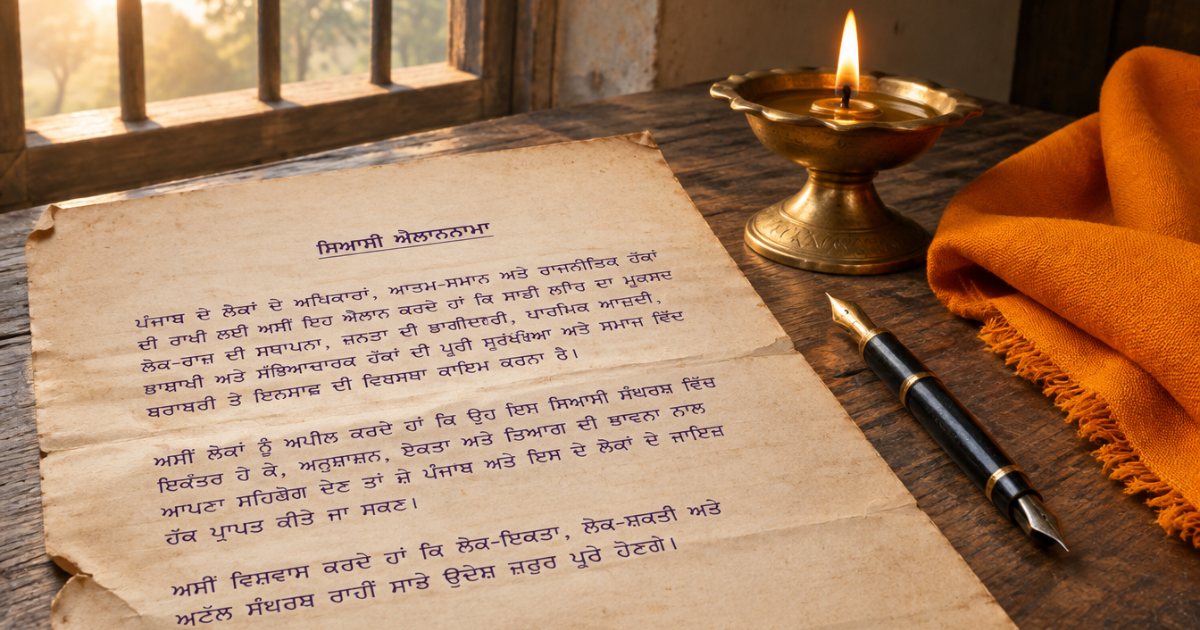
The picture at the top of this page is an illustration, not the 1973 document.
Read also: The annexation of Panjab (1849) · Sikh Genocide 1984 · Bhai Jaswant Singh Khalra
Learn it, then live it
Give an hour to the club’s next clean-up, blood drive or community event.
Volunteer with us