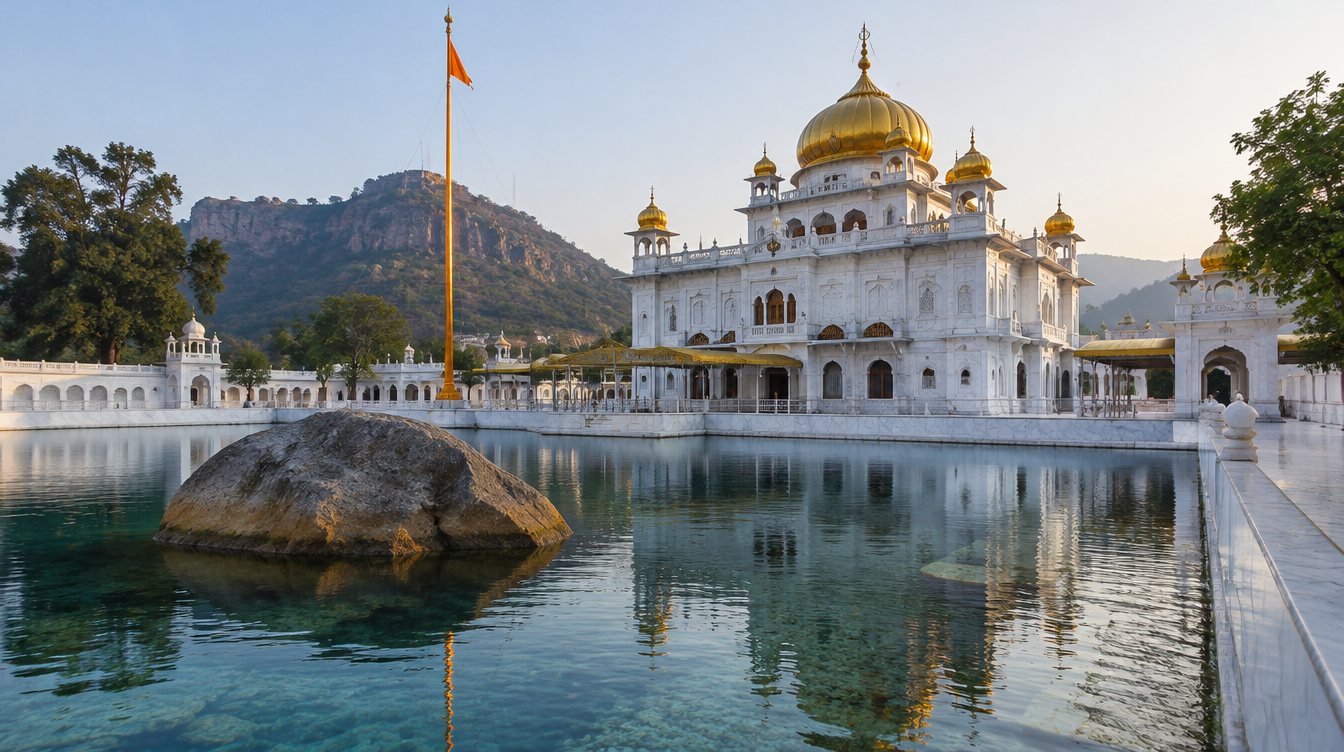
Saka Panja Sahib: when the sangat stopped a train with their lives
On 30 October 1922 the sangat of Hasan Abdal sat on the railway line so Guru ka Bagh prisoners could be served langar. Remembering Bhai Karam Singh and Bhai Partap Singh.
3 min read
Sport, culture and service in London, Ontario
Birth anniversary
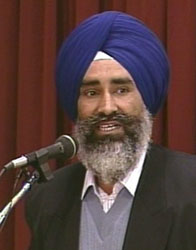
1952 – 1995 · Remembered on his birth anniversary, 2 November
He asked where thousands of missing young men had gone, and kept asking until the records answered. On his birth anniversary, the club remembers the man and the work.
Jaswant Singh Khalra was born in 1952 and came from Khalra village in what is now Tarn Taran district, Punjab. He worked in banking in Amritsar and was a family man, married to Paramjit Kaur. He also served as general secretary of the human rights wing of the Akali Dal. Nothing about that life suggested he would become one of the best-known human rights defenders in Sikh history.
Each year on his birth anniversary we remember him not as a slogan, but as an ordinary person who chose to do a difficult and dangerous thing, carefully and in public.
In the early 1990s, families across Punjab were reporting that sons, brothers and husbands had been taken away by the police and never returned. Khalra set out to find out what had happened to them. Instead of relying only on what people remembered, he went to the records kept by the authorities themselves, including the registers of municipal cremation grounds.
According to Human Rights Watch, his investigation alleged that security forces had abducted, killed and secretly cremated thousands of people in Punjab between 1984 and 1994, and he documented more than 2,000 secret cremations in Amritsar district alone. In January 1995 his party filed a petition in the Punjab and Haryana High Court about the deaths of hundreds of unidentified people, and Amnesty International reported that he was threatened by a member of the Punjab police shortly afterwards. Later that year he travelled to Canada to tell the Punjabi community and Canadian politicians what he had found.
On 6 September 1995, Khalra was taken by Punjab Police officers outside his home in Amritsar, where he had been washing his car. Amnesty International issued an urgent appeal the same day, warning that he was at risk of disappearance and torture. He was never seen alive again. In November 1995 the Supreme Court of India ordered the Central Bureau of Investigation (CBI) to investigate both his abduction and the cremations he had exposed.
In December 1996 the Supreme Court said the CBI’s inquiry revealed a “flagrant violation of human rights on a mass scale” and asked the National Human Rights Commission (NHRC) to deal with the cremations. The NHRC’s case record concerns 2,097 bodies cremated at Amritsar, Tarn Taran and Majitha between 1984 and 1994, and it ordered compensation of Rs 1.75 lakh each to the families of 1,051 of those victims.
In 2005, ten years after his disappearance, a court convicted six police officials over his abduction and murder. In 2007 the Punjab and Haryana High Court raised the sentences to life imprisonment, and on 4 November 2011 the Supreme Court of India upheld the life sentences. The court held that recovering a body is not a condition for convicting someone of murder.
His visit to Canada is remembered here. In 2020, on the 25th anniversary of his disappearance, the cities of Burnaby, New Westminster and Brampton proclaimed 6 September as Jaswant Singh Khalra Day.
Bhai Jaswant Singh Khalra spent his life making sure that people who had been lost were counted. Our annual blood donation camp carries his name for the same reason: giving blood is a quiet, practical way to protect life. If you would like to mark his birth anniversary, book a blood donation with our team, or read the full story of his life and legacy.
On 30 October 1922 the sangat of Hasan Abdal sat on the railway line so Guru ka Bagh prisoners could be served langar. Remembering Bhai Karam Singh and Bhai Partap Singh.
3 min read
The November 1984 killings of Sikhs in Delhi and across India, recognised by the Legislative Assembly of Ontario as the 1984 Sikh Genocide. What happened, and why our club remembers.
4 min read
The life and legacy of Bhai Jaswant Singh Khalra (1952-1995), the Sikh human rights defender whose documentation of enforced disappearances in Punjab cost him his life - and why the club's blood donation camp carries his name.
4 min read