June 1984: the assault on Sri Harmandir Sahib
By the early 1980s Punjab was in deep political crisis. Talks between the Indian government and the Akali Dal had broken down, and armed Sikh fighters led by Sant Jarnail Singh Bhindranwale had taken up positions inside the Golden Temple complex in Amritsar, including the Akal Takht.
On 1 June 1984, the government of Prime Minister Indira Gandhi ordered the army into the complex. The heaviest fighting came on the nights of 5 and 6 June, and tanks and artillery were used against the holiest place in the Sikh world. A curfew was imposed across Punjab and journalists were sent out of the state, so for days little was known outside.
The timing made the loss far worse. It was the anniversary of the martyrdom of Guru Arjan Dev Ji, under whom Sri Harmandir Sahib was built, and thousands of pilgrims, including women, children and the elderly, were inside the complex when the curfew fell.
The Indian government’s White Paper put the dead at 493 people inside the complex and 83 soldiers. Eyewitnesses, independent accounts and Sikh organisations have always said the true number was far higher, running into the thousands, many of them pilgrims. The Akal Takht was badly damaged, and the Sikh Reference Library was burned, and with it many handwritten manuscripts and historical documents, some of them centuries old.
For Sikhs, the wound of June 1984 is not only the lives that were lost, but where and when it happened: in the House of God, on a day of remembrance.
Why the memory remains so strong
November 1984: the killing of Sikhs
On 31 October 1984, Indira Gandhi was assassinated by two of her Sikh bodyguards. Over the following days, organised mobs went looking for Sikhs in Delhi and in many other cities and towns. Sikh men and boys were dragged from homes, buses and trains and killed, many of them burned alive. Women were assaulted, and homes, shops and gurdwaras were set on fire. Survivors described mobs that came with lists of Sikh homes, and police who stood by or did not come at all.
Official figures record about 2,800 Sikhs killed in Delhi and about 3,350 across India. Other estimates run much higher, from 8,000 to 17,000. Tens of thousands of Sikhs were left homeless, and many widows’ colonies in Delhi still carry the memory today.
Later inquiries, including the Nanavati Commission, found that local political leaders had incited or helped the mobs, and that the police had largely failed to protect Sikh lives.
Why it is called a genocide
What happened in November 1984 was not a spontaneous clash between communities. Sikhs were targeted because they were Sikhs, over several days, with the state failing to stop it. The Akal Takht, the highest seat of Sikh authority, has declared the killings a genocide, and Sikh organisations around the world use the same word.
Here in Ontario, on 6 April 2017, the Legislative Assembly of Ontario agreed to a private member’s motion, supported by members of all three parties, recognising the events as the 1984 Sikh Genocide. The Indian government objected to the motion, but for many Sikh families in this province it was the first time an elected body had named what they lived through.
Justice, slowly
At least ten commissions and committees of inquiry were set up over the years. In 2005 India’s Prime Minister, Dr Manmohan Singh, apologised to the Sikh community in Parliament. A small number of people were finally convicted, including a former Member of Parliament sentenced to life imprisonment by the Delhi High Court in 2018, thirty-four years after the killings. For most families, no one was ever held to account.
The years that followed
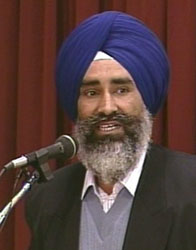
The decade after 1984 brought more grief in Punjab, where thousands of young Sikhs disappeared, a history that Bhai Jaswant Singh Khalra gave his life to document. It brought violence beyond India too. Here in Canada, the bombing of Air India Flight 182 in June 1985 killed 329 people, most of them Canadians: the worst act of terrorism in our country’s history. The Government of Canada marks 23 June, the anniversary of the bombing, as the National Day of Remembrance for Victims of Terrorism. Every innocent life lost in those years is mourned, whoever they were.
How it is remembered
Every year Sikhs remember June 1984, the Ghallughara, in the first week of June, and the killings of November 1984 at the start of November. Gurdwaras hold prayers and readings, families remember those they lost, and communities hold vigils and remembrance gatherings. In Canada, home to one of the largest Sikh communities outside India, these days carry special weight.
Why our club remembers
The Panjabi Sports and Social Club is not a political organisation. We remember 1984 because it is part of the history of so many of our members’ families, and because remembering truthfully is how a community heals. We remember the pilgrims who never came home, the men and boys killed in November, the women who survived and rebuilt, and the families who are still waiting for justice.
The same years produced people like Bhai Jaswant Singh Khalra, who answered loss not with hatred but with patient, peaceful work for truth and justice. That is the example we try to follow: through service, through friendship with our neighbours, and through building a community where everyone is safe.
Sources
This page is an act of remembrance written by the Panjabi Sports and Social Club, London, Ontario, for our community and neighbours. It is a summary rather than a scholarly account, and some figures from that period are still disputed; readers who want the full record should consult the reports of the commissions of inquiry, human rights organisations and historians.