Sewa: the Sikh tradition of selfless service
Serving others and expecting nothing back. What sewa means, where langar comes from, the story of Bhai Ghanaiya, and why it is the idea our club was built on.
22 October 2026 · 4 min read
Volunteering
ਪਵਣੁ ਗੁਰੂ ਪਾਣੀ ਪਿਤਾ ਮਾਤਾ ਧਰਤਿ ਮਹਤੁ · Why our club looks after Meadowgate Park
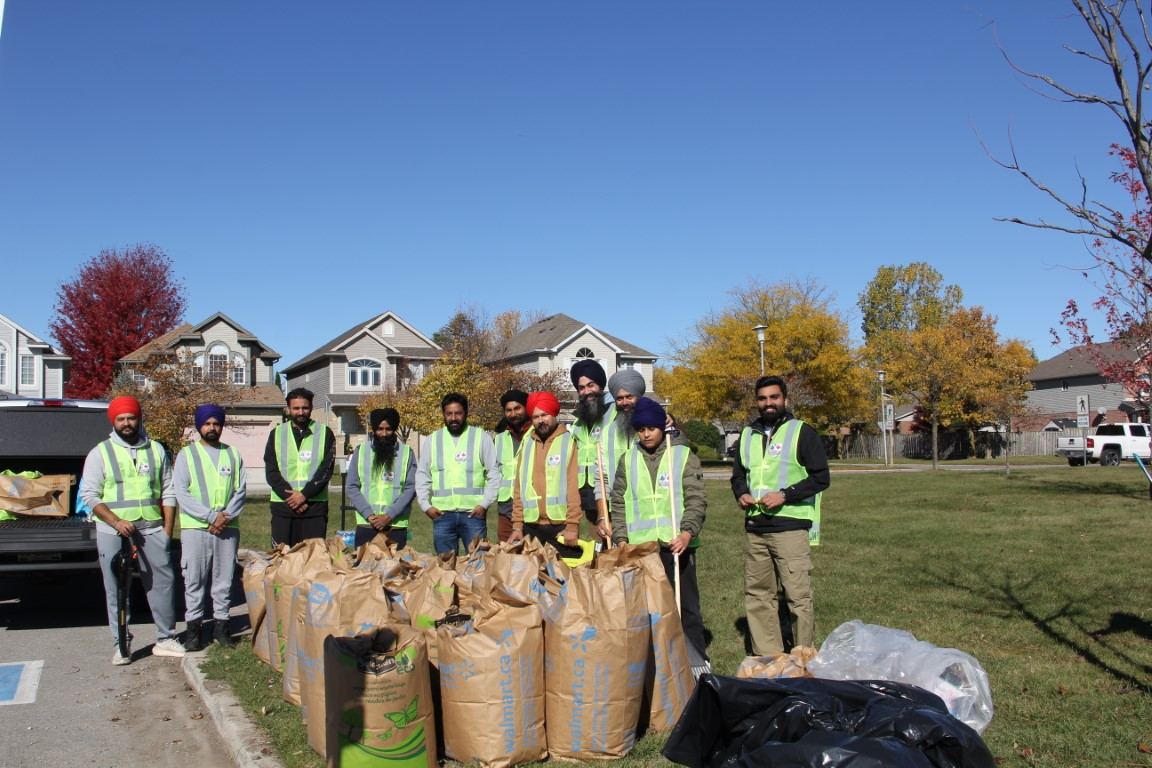
Twice a year, in the fall and again before spring, club members, families and neighbours meet at Meadowgate Park with gloves and bags. It is a small job. But it comes from a very old idea: that the air, the water and the earth deserve the same care we give our own family.
The Japji Sahib, the prayer of Guru Nanak Dev Ji that many Sikhs recite every morning, ends with a short verse. Its opening line is one of the best known in the Sikh tradition:
ਪਵਣੁ ਗੁਰੂ ਪਾਣੀ ਪਿਤਾ ਮਾਤਾ ਧਰਤਿ ਮਹਤੁ
Pavan guru, pani pita, mata dharat mahat
Air is the teacher, water the father, and the great earth the mother.
The verse places the natural world inside the family. Nobody fouls a home they share with their mother and father, or treats their teacher with contempt. Read that way, caring for the environment is not a hobby or a cause for a few. It is part of how a person is meant to live.
Guru Har Rai Ji, the seventh Sikh Guru, is remembered for his gentleness towards every living thing. At Kiratpur Sahib he kept gardens and cared for plants, animals and birds, and a well-known story tells how, as a boy, he was saddened to see flowers broken when his robe brushed past them, and learned to walk more carefully from then on.
Since 2011, Sikhs around the world have marked Sikh Environment Day on 14 March, the anniversary of the day Guru Har Rai Ji became Guru. Gurdwaras and families use it to plant trees, clean up their neighbourhoods and talk about how to waste less.
The Kali Bein is a river of about 160 kilometres in Punjab. Guru Nanak Dev Ji is believed to have attained enlightenment after bathing in it at Sultanpur Lodhi, where Gurdwara Ber Sahib stands on its bank. By the end of the 1990s the river was choked with weeds and polluted with waste.
In 2000, Sant Balbir Singh Seechewal began a kar sewa, a volunteer effort, to bring it back. Thousands of people came to work, day after day for years, clearing water hyacinth by hand, building bathing ghats and a road along the bank. As the river recovered, the water table around it rose, and village hand pumps that had been dry for years worked again. It remains one of the clearest examples of what ordinary volunteers can do for the land they live on.
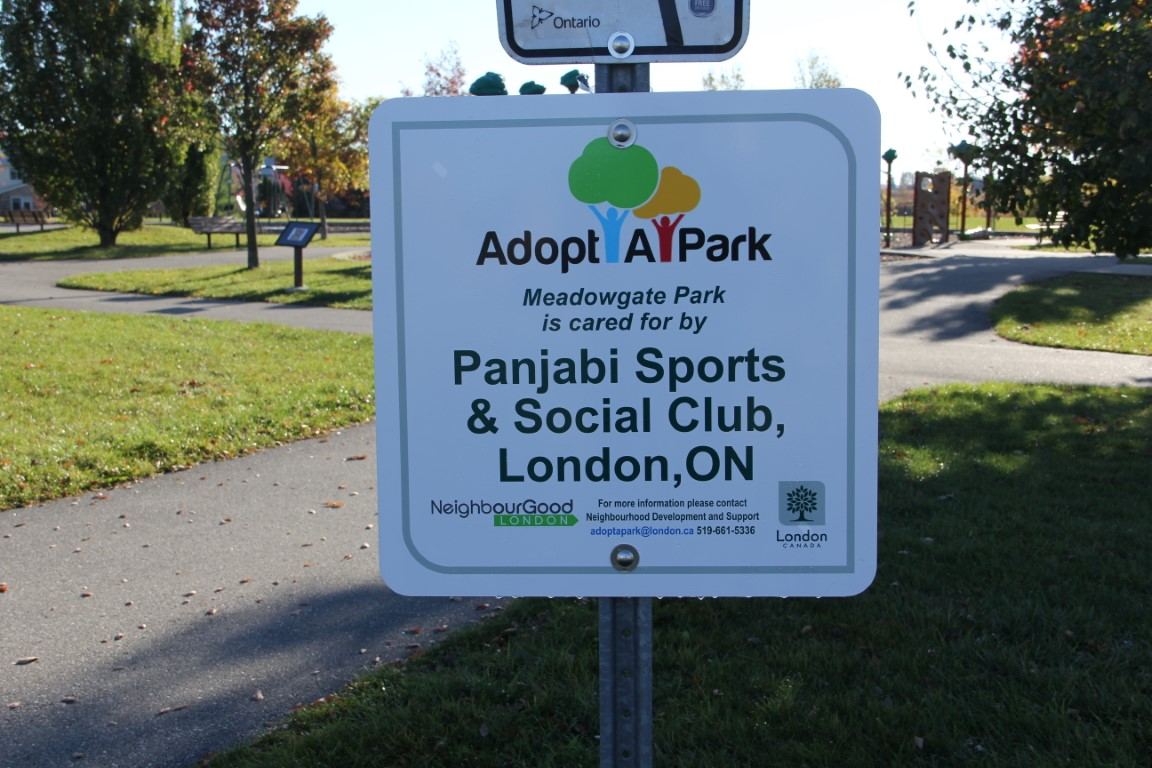
Our own part is much smaller, but the idea is the same. Through the City of London’s Adopt-a-Park programme, the club has taken on the care of Meadowgate Park, and a sign in the park now says so.
Litter in a park does not stay where it is dropped. Wind and rain carry it into storm drains, and from there towards our creeks and rivers. Plastic does not break down; it only breaks up into smaller and smaller pieces. And a park that looks cared for gets used: children play in it, families picnic in it, and neighbours meet in it. A park that looks neglected slowly empties.
We clean the park twice a year. The fall clean-up clears the litter and the fallen leaves, and we do the same again before spring arrives. The club has now run three of these drives, the third on 24 October 2026. Each one fills bag after bag, and each one brings out new faces.
You do not need to be Sikh, or Panjabi, to join in. The park belongs to all of us.
Give a couple of hours at our next park clean-up, in the fall or before spring. Everyone is welcome, and no experience is needed.
Volunteer with usThis page is a short introduction written by the Panjabi Sports and Social Club, London, Ontario, for our community and neighbours. It is a summary rather than a scholarly account; readers who want to learn more are welcome to visit a local gurdwara, where the sangat will be glad to explain.
Serving others and expecting nothing back. What sewa means, where langar comes from, the story of Bhai Ghanaiya, and why it is the idea our club was built on.
22 October 2026 · 4 min read
On the night many neighbours celebrate Diwali, Sikhs remember Guru Hargobind Sahib Ji, who would not leave prison without 52 kings. What the day means, and how it is marked in London. In 2026: Sunday 8 November.
22 October 2026 · 4 min read
The Panjabi Sports & Social Club stands with a London family after the sudden loss of Raman Devi, a mother to two young children. Our thoughts are with her children and her family.
19 September 2026 · 1 min read